PD-L1 Testing in Cancer: IHC Scores and Result Interpretation
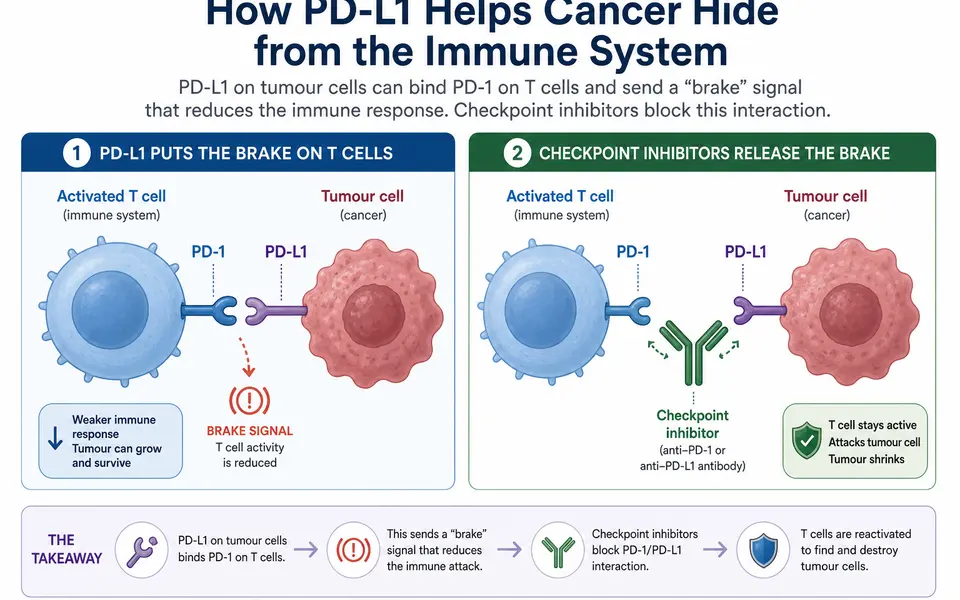
Understand what PD-L1 IHC measures, how TPS, CPS and immune-cell scores are calculated, and why results must be interpreted by your oncology team.
Explore practical articles, visual explainers and clear answers from our latest published knowledge.
Understand what PD-L1 IHC measures, how TPS, CPS and immune-cell scores are calculated, and why results must be interpreted by your oncology team.
Variants, biomarkers, evidence tiers and the questions to take to your oncologist
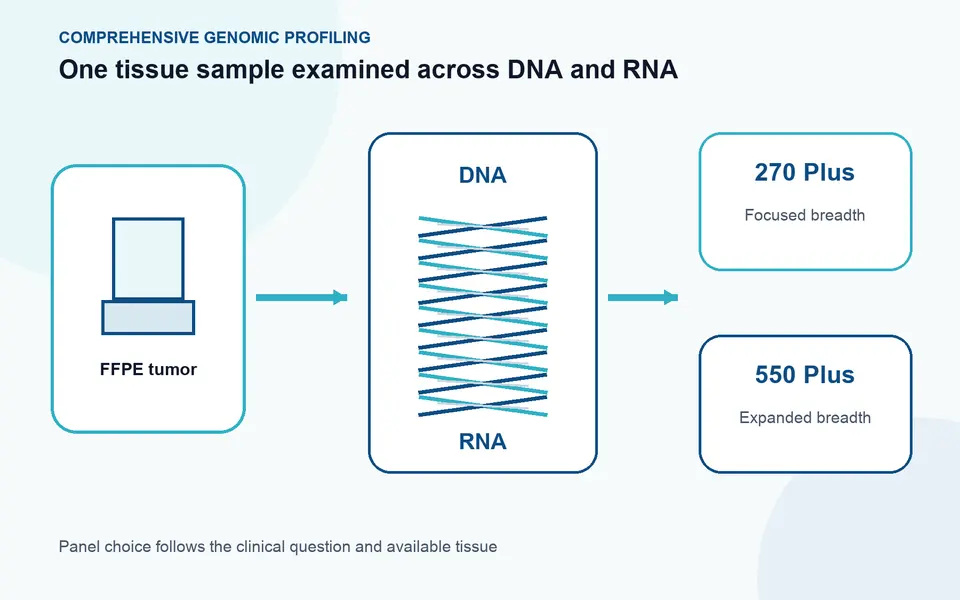
How the panels differ and how to read a comprehensive genomic profile
What the tests measure and how results support treatment discussions

Yes. Expression may differ between tumour areas, between a primary and metastatic site, or after treatment. Whether a newer sample or repeat test would be useful is a clinical decision based on tissue availability and the treatment question.[6]
Read the full answerNot universally. Whether a PD-L1-negative result excludes a therapy depends on the medicine, tumour type, disease setting, assay and jurisdiction. Some regimens do not require PD-L1 positivity, while others do. Check the current applicable label or guideline; do not generalize from another cancer.[10]
Read the full answerOften the laboratory can use stored tissue from an earlier biopsy or operation. Another procedure may be considered if that tissue is unavailable, inadequate or no longer suitable for the clinical question. Your doctor should explain whether a new biopsy could add useful information and what risks it carries.
Read the full answerEditorial review
Behind the answers
articles in this library credit both their writers and reviewers.
Oncquest Laboratories Ltd is known for its excellence in Clinical Diagnostics.
Dr. Jasmine Kaur is a Consultant in R&D in the Molecular Biology and Genomics Department at Oncquest Laboratories.
Dr. Monica Verma is Head of Surgical Pathology at Oncquest Laboratories.
Connected reading
Publication log

